
Balenciaga is one of the most misunderstood houses in luxury fashion.
Some people see oversized sneakers, enormous hoodies, and garments that appear to have already lived several lives. Others think of Cristóbal Balenciaga, the great couturier who transformed the space between the body and the clothes surrounding it.
Both versions belong to the same house.
Balenciaga has never been primarily about beauty designed to win approval. Its deeper talent lies in changing the very definition of what beauty is allowed to be.
Cristóbal Balenciaga opened his first haute couture house in San Sebastián in 1917. In 1937, he established himself in Paris on Avenue George V.
His Spanish origins remained visible throughout his work: in his love of deep black, lace, austere ceremony, and silhouettes that often approached architecture.
Balenciaga was not simply a designer who sketched ideas for others to execute. He understood cutting and construction intimately, which allowed him to control a garment from the first concept to the final seam.
His greatest interest was not decoration, but volume.
He shifted attention toward the back, moved fabric away from the body, concealed the waist, and built silhouettes around the woman rather than tracing her figure directly.
The sack dress of 1957 removed the emphasis from the waist entirely and initially puzzled the public. Before long, however, its ideas became part of a new fashion language.
Tunics, baby-doll shapes, cocoon silhouettes, and sculptural evening gowns proved that status could be expressed not only through embellishment, but through mastery of proportion.
Historic Balenciaga is particularly valued by people with a trained eye.
A black coat may appear simple at first, but someone who understands the house will notice the shoulder line, the rounded back, the purity of the sleeve, and the way the fabric holds its shape in motion.
This is one of the highest forms of couture coding.
The garment does not announce its price through a monogram. It asks the observer to have enough knowledge to understand what they are looking at.
The simpler the silhouette appears, the more complex the construction may actually be.
The modern house continued to provoke audiences, but through different means.
Where Cristóbal Balenciaga removed the waist and altered the volume of dresses, later designers exaggerated shoulders, extended sleeves, and transformed ordinary garments into monumental forms.
The Triple S sneaker, oversized puffer jackets, T-shirts, and hoodies asked luxury customers to pay not for conventional refinement, but for concept, irony, and participation in the contemporary fashion conversation.
This is what makes Balenciaga socially complicated.
A beautifully cut coat with extraordinary volume can communicate cultural capital.
A logo hoodie or oversized sneaker communicates something else: awareness of streetwear, money, and a willingness to participate in provocation.
A deliberately distressed garment may command a very high price because the buyer is paying for the concept rather than visible newness.
The Le City bag, first introduced in 2001, represents a more approachable side of the house.
Its soft leather, straps, and relaxed structure made it the opposite of the rigid, traditionally ladylike handbag.
It works naturally with coats, denim, and leather jackets.
Vintage City bags can be particularly interesting to collectors, but they require careful inspection of the corners, handles, hardware, and provenance.
There is an important difference between a bag that has developed beautiful character and one that is simply in poor condition.
The Hourglass takes a different approach.
Its curved base recalls archival Balenciaga jackets with defined waists and rounded hip lines.
A structured body and prominent B hardware make the bag both polished and immediately recognizable.
It works well in restaurants, at meetings, or in an outfit that needs one strong graphic object.
There is little reason to pair an Hourglass with oversized logos on both clothing and shoes.
Its shape is already doing enough.
In 2021, Balenciaga returned to haute couture after a fifty-three-year absence.
The contemporary couture collections again explored volume, black, distance between fabric and body, and a sense of ceremony.
To understand Balenciaga properly, it helps to see both levels of the house.
Recognizable accessories provide visibility.
Couture preserves its grandeur.
A first purchase should begin with one question: which version of Balenciaga actually appeals to you?
Le City suits a relaxed urban wardrobe. The Hourglass fits a more structured and social one. An architectural coat is for the woman who values cut more than logos. Unusual footwear suits someone who genuinely enjoys fashion experimentation.
Buying a provocative piece simply because everyone is talking about it can be risky.
A season later, what once looked daring may simply look arbitrary.
The most common mistake is wearing every Balenciaga code at once.
An oversized hoodie, wide trousers, massive sneakers, shield-like sunglasses, and a bag with a prominent B can turn the wearer into a display case for the concept.
One disruption of proportion is usually enough.
An oversized coat benefits from calm trousers. Heavy sneakers work better with clean denim. An Hourglass bag needs little more than a restrained suit.
Balenciaga does not guarantee that you will “look rich.”
Sometimes it makes an expensive object resemble something cheap, a new garment look old, or an elegant piece appear deliberately awkward.
That is part of its intellectual game.
Balenciaga is not chosen for the safety of an easy compliment.
It is chosen for the right to influence how other people see.
Its code is to wear a difficult idea with such confidence that, a year later, everyone else begins to think it was obvious all along.
Best books and practical guides
-
750 Habits for Beautiful Living: Simple Ways to Slow Down, Find More Joy, and Build Your Dream Life
19,99 $ -
How to Save Money Guide: Money Tips
Original price was: 16,99 $.9,99 $Current price is: 9,99 $. -
From Dream to Goal: Financial Goal Setting Guide
Original price was: 16,99 $.9,99 $Current price is: 9,99 $. -
Luxury Home Decor Guide: Make Your Home Look Expensive on a Budget
Original price was: 16,99 $.9,99 $Current price is: 9,99 $. -
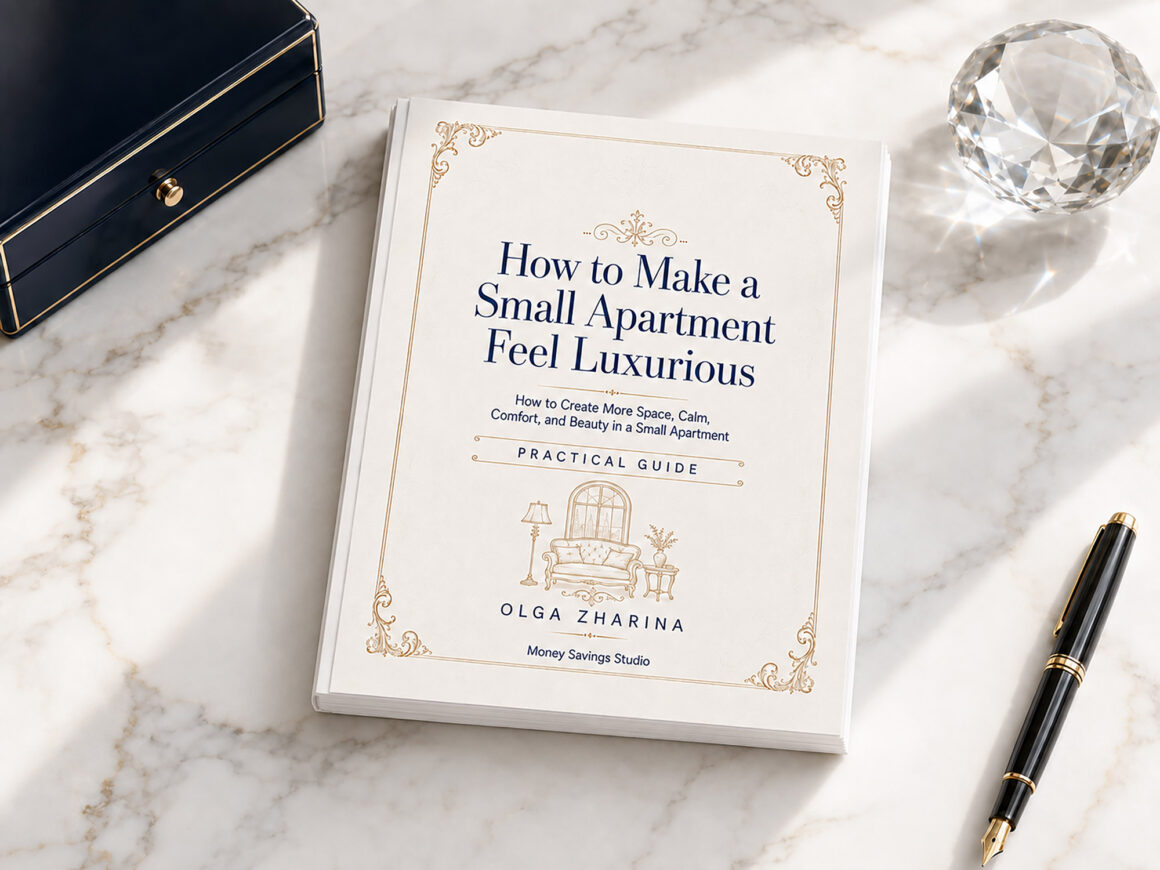
Small Apartment Interior Design Guide: Make a Small Space Feel Luxurious
Original price was: 16,99 $.9,99 $Current price is: 9,99 $.
Fashion (1) Fashion Brands (80) Fashion Designers (10) Бренды (56) Книги (1) Мода (32) Стиль (22) Стиль жизни (71)
