Brunello Cucinelli is the kind of luxury that makes its wearer look as though she had no intention of impressing anyone — and still became the most impeccably dressed woman in the room.
Soft cashmere, pale trousers, a relaxed jacket, and suede sneakers create the image of someone accustomed to private flights, excellent hotels, and weekends at a villa.
There are no oversized logos here. Only expensive ease — and the kind of ease that requires genuine taste.
The story of the house began in 1978 with an unusual idea.
A young Brunello Cucinelli decided to dye cashmere in contemporary colors and use it for women’s sweaters. Until then, cashmere was often associated with conservative, traditional clothing. Cucinelli gave it the lightness and modernity of Italian fashion.
In 1982, he established his business in the medieval hamlet of Solomeo near Perugia, the hometown of his wife, Federica. Over time, the village became an essential part of the identity and mythology of the brand.
Cucinelli invested in restoring Solomeo and supporting craftsmanship, culture, and education.
He describes his business philosophy as “humanistic capitalism”: profit matters, but work should preserve human dignity, while a company should respect the land and the community around it.
That idea explains the character of the brand better than almost any advertising campaign.
These clothes are meant to serve the person wearing them, provide physical comfort, and never turn the client into a walking billboard.
Cashmere remains the foundation, often combined with silk, cotton, linen, or wool.
But Brunello Cucinelli has long since evolved into a complete wardrobe: tailoring, coats, shirts, dresses, shoes, knitwear, and accessories.
Its tailoring rarely feels severe.
A jacket may be slightly elongated, trousers relaxed, a shirt casually open at the neck, sleeves pushed back with apparent ease.
This is Italian sprezzatura: visible effortlessness supported by precise fit, exceptional materials, and a carefully constructed composition.
One of the most recognizable codes of the women’s collections is monili — fine chains of faceted metal beads.
They appear along collars, pockets, shoes, and accessories, giving cashmere a subtle shimmer.
A Brunello Cucinelli woman does not have to choose between comfort and polish. She can arrive at dinner in soft knitwear, while the glint around the neckline makes it clear that this is not an ordinary sweater.
Monili works best as a jewelry-like accent, not as an invitation to add more sparkle.
The house’s palette is built around cream, sand, camel, greige, tobacco, white, and softly washed denim.
These colors evoke leather, wood, stone, and Italian sunlight.
Texture is equally important.
Fluffy cashmere may sit beside smooth silk, suede next to linen, substantial wool over a fine shirt.
This is why an almost monochromatic Brunello Cucinelli outfit rarely feels flat.
Its quiet luxury is created through the conversation between materials.
The social code of Brunello Cucinelli is affluent life beyond formal ceremony.
These are clothes for a private flight, Courchevel, Sunday lunch at a country house, an art fair, or a meeting with investors.
They communicate something very specific:
“I do not need to change costume in order to belong here.”
If Loro Piana represents the almost silent perfection of material, Brunello Cucinelli adds Italian warmth, layering, and a touch of sophisticated nonchalance.
A first purchase might be a cashmere sweater, a beautifully cut jacket, relaxed trousers, or suede sneakers.
The best choice is something that connects the wardrobe you already own.
A cream sweater should work with jeans, skirts, and tailored trousers. A jacket should move easily between the city, travel, and dinner.
With Brunello Cucinelli, frequency of use justifies the investment far more convincingly than a garment reserved for rare formal occasions.
One common mistake is wearing everything soft, oversized, and beige at once.
Then ease becomes shapelessness, and quiet luxury starts to resemble a social-media costume.
The outfit still needs structure: a defined shoulder, a belt, straight trousers, a more structured handbag, or polished shoes.
A white shirt, navy jacket, or charcoal trousers can make pale cashmere look far more sophisticated than yet another layer in the color of oatmeal.
Cashmere is not an untouchable treasure, but neither should it be treated like an ordinary sweatshirt.
Knitwear benefits from rest between wears, should generally be stored folded, protected from moths, and cleaned with restraint.
Some pilling in areas of friction is natural and can be removed carefully.
True luxury is meant to participate in life, not remain in a box waiting for the perfect occasion.
Brunello Cucinelli suits a woman who wants to look affluent, modern, and approachable.
The house does not create the distance of the grand society lady, nor does it offer adolescent provocation.
Instead, it sells the image of a woman who is already the hostess of a beautiful life.
She welcomes guests, travels without rushing, understands materials, and does not need every detail of her wardrobe to prove her status.
These clothes do not shout about money.
They suggest something more convincing: that comfort, time, and freedom of choice already belong to the woman wearing them.
Best books and practical guides
-
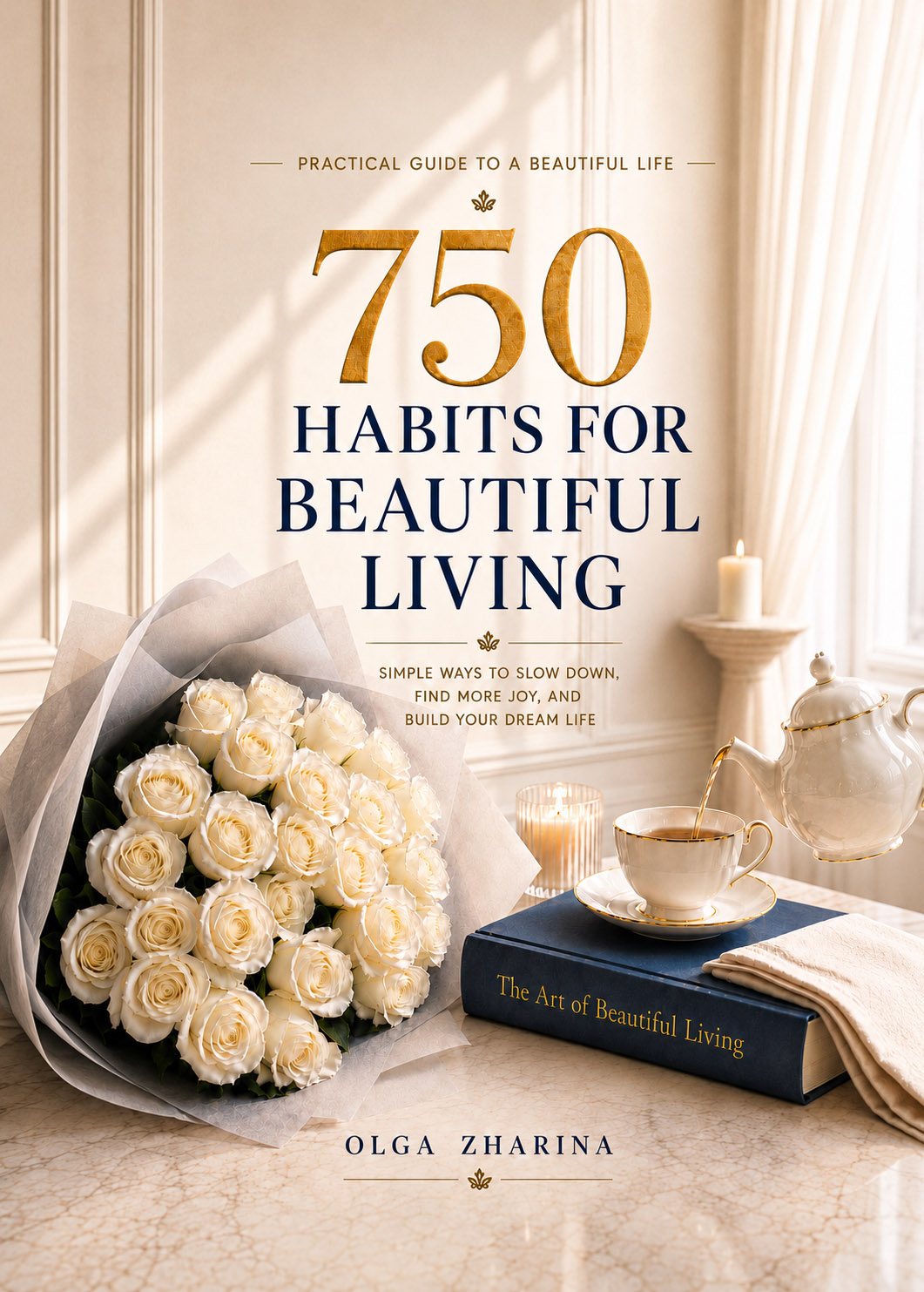
750 Habits for Beautiful Living: Simple Ways to Slow Down, Find More Joy, and Build Your Dream Life
$19.99 -
How to Save Money Guide: Money Tips
Original price was: $16.99.$9.99Current price is: $9.99. -
From Dream to Goal: Financial Goal Setting Guide
Original price was: $16.99.$9.99Current price is: $9.99. -
Luxury Home Decor Guide: Make Your Home Look Expensive on a Budget
Original price was: $16.99.$9.99Current price is: $9.99. -
Small Apartment Interior Design Guide: Make a Small Space Feel Luxurious
Original price was: $16.99.$9.99Current price is: $9.99.